
I’m always on the lookout for resources that spark something in my kids - people, places, activities, books or games that really inspire them.
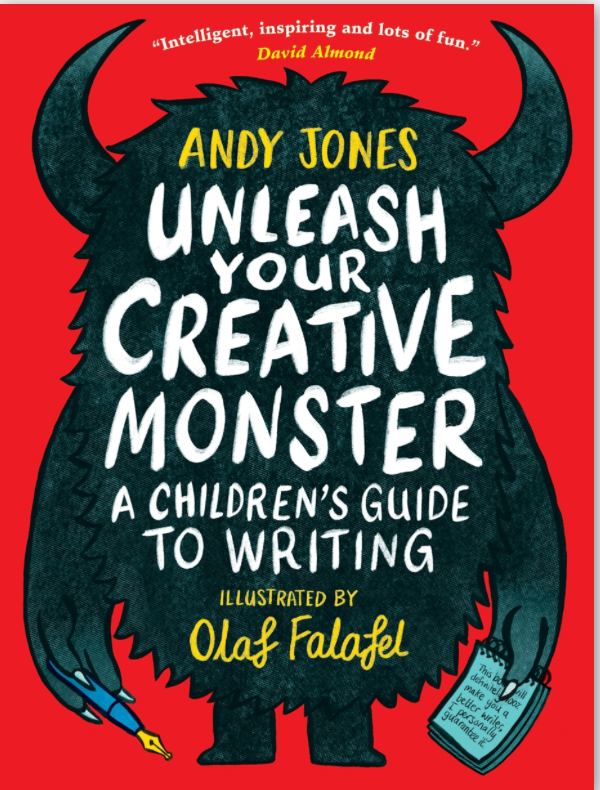
Recently, we came across a book that does just that, and I’d love to share it with you. It's called ‘Unleash Your Creative Monster’ by Andy Jones, and it’s all about getting creative with storytelling, without fear of mistakes.
I’ve always loved doing creative writing with my kids, but this book has taken it to a whole new level. It’s fantastic for getting storytelling ideas flowing, and rather than thinking in terms of age, I’d say it works really well for any child who’s already writing - and, with a bit of support, for those who aren’t quite there yet.
Beyond the Basics: Exploring Storytelling Elements
The book covers all the building blocks of a great story - from creating intriguing characters and building emotion to more advanced ideas like using objects to add meaning (such as Chekhov's Gun) and bringing multiple plot lines together.
What I love most is how it introduces each theme in an engaging, accessible way. The story prompts focus on ideas and understanding rather than spelling, grammar or handwriting. Those skills still matter, of course, but editing and polishing come later.
As Andy Jones says, “Get it written, and then get it right!” First, it’s about getting thoughts and imagination onto the page.
How it Works
The book works best in chronological order, as some exercises build on earlier ones, but it’s flexible - you can skip sections or adapt it to fit your child’s needs.
It’s the most fun when we all join in - even Granny got involved when she was visiting recently! But it also works really well one-to-one, especially if your kids need help writing down their ideas or if you want to explore a section more deeply.
Each section introduces a new storytelling concept followed by exercises and prompts. For example, in “The Importance of Conflict” section, Andy Jones shows how a story like The Cat Sat on the Mat feels dull, but The Cat Sat on the Dog's Mat instantly becomes intriguing. For this he uses the prompt:
"Write a story involving a cat, a dog and a snuggly (if a bit stinky) mat."
Another prompt later in the book relating to writing a description with unusual words:
"Describe a tree without using the words: trunk, branch, leaf or tree."
These are just small examples - the book goes into much more depth, but you can skip sections you’re not ready for.
Making It Work for Your Family
We usually write for around 10 minutes or longer - it doesn’t have to be “finished,” and there’s no strict time limit if someone wants to keep going. At the end, we share what we've written. It’s always fascinating to see how differently each of us interprets the same prompt.
If your child isn’t writing yet, you can jot down their ideas for them. It’s a collaborative process that removes the pressure of spelling, grammar and handwriting and lets them focus on storytelling.
This approach works especially well when you link it to books you’re already reading. We’ve been going through the Harry Potter series recently and can spot so many of these ideas in how the stories are written. Making connections to familiar books helps concepts sink in - for example, noticing a metaphor or how a character is introduced. Next time you’re reading together, try pulling out what you’ve learned from these storytelling exercises.
The Magic of Organic Learning
The real magic happened a little while after starting the book. Inspired by it, my son started creating his own book of short stories, which he’s determined to fill up. He won’t let anyone see them until he’s finished though!
This wasn’t prompted by me - it simply happened. That’s the power of letting a spark ignite curiosity and allowing learning to happen organically. It's a great example of why I love this book: it doesn’t impose structure or expectations. Instead it provides tools and inspiration for children to discover their own voices.
Tips for Getting the Most Out of It
✏️ Do it together: It’s fun when everyone participates, but adapt it to what works best for your child.
✏️ Focus on creativity: Forget about perfect handwriting or spelling. This is about ideas first.
✏️ Write for those who can’t yet: Children can still contribute through imagination.
✏️ Anything goes: No criticising or correcting (it will ruin it completely!) - encourage experimentation and risk-taking. Meet them where they are and come back to tricky elements later.
✏️ Link it to books you’re reading: Pointing out storytelling elements in familiar stories reinforces the concepts.
This book is a reminder that storytelling is something we all do - it’s part of being human, and everyone has a story to tell.
I’ll continue to share resources like this - the ones that genuinely spark something and encourage children to explore and create on their own. Watching that curiosity grow and seeing them take charge of their own learning is what makes this approach so worthwhile. It hands the learning to them, which is exactly where it belongs.
📚 Interested in the book? We ordered ours from our local library and have continued to renew it, although it's such a good resource that I might buy a copy to keep.