
"If history were taught in the form of stories, it would never be forgotten."
Rudyard Kipling
In school, history is taught in topics: interesting periods, but kept apart. There’s nothing wrong with that, but it can mean the connections between different eras and cultures get lost.
When I started home educating, history fast became my favourite subject - I’m still discovering things I never knew and am often reading the books way after my kids have moved on.
Here, I share how we learn history and how it's become a thread that weaves through so much of our other learning. It connects, overlaps and shows how different times, places and events all influence one another and how it has shaped our world today.
1. Starting with the Big Picture: A Chronological Foundation
I never learnt history chronologically at school. It jumped between Henry VIII, the Romans, the Greeks - interesting snapshots, but without showing how it all fits together. Seeing events in order helps to make the bigger picture so much clearer.
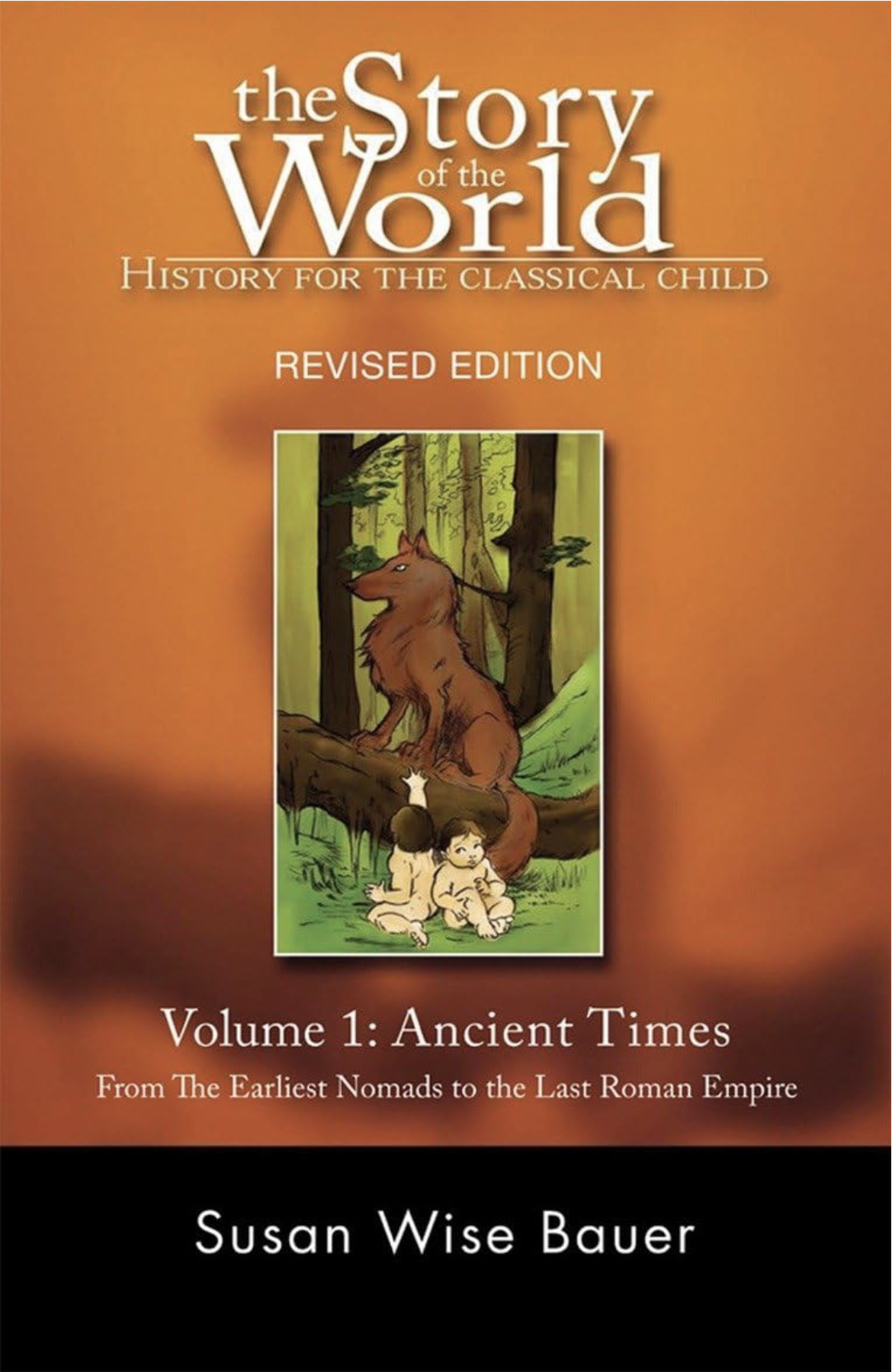
We use Story of the World by Susan Wise Bauer as our base. It's not perfect, but no history books are, and I'm yet to find a better alternative for an engaging chronological story of history since the ancient times.
Here’s why it works well:
Chronological Coverage: Book 1 begins around 7000 BC and Book 4 ends with the modern day. The idea is to read one each year starting around age 6/7, then repeat - but you can go at whichever pace suits you. Sometimes your kids might want to skip ahead (like my son who was desperate to learn about the world wars), so you can do that and come back later to where you left off.
Interconnectedness: It highlights how different countries and events are linked, showing the big picture of world history.
Anchor Point: It’s a great starting place for further exploration. It doesn’t cover everything, but it provides a framework to build on. Since my children have both English and Chinese heritage, we spent extra time diving into Chinese history, which the book covers less thoroughly than European and American history.
Storytelling: It's good as a read aloud or bedtime story - written in a narrative style, making it much more appealing than a dry reference book.
Flexibility: We skip the parts that don’t grab their interest and spend more time on topics they enjoy. We'll come back to it in the future so it doesn't matter if we don't cover it all straight away - some parts are naturally heavier (and drier!) than others.
Critical Thinking: Some of it's inaccurate, some is biased and some important parts are missing. This is such a great talking point! All history books have biases and omissions. It gives us plenty to question and discuss!
2. Adding in the extras
Now we have this baseline, we can add in other things:
Globes & Maps: We always need a map or globe when reading this book - it makes it so much easier to picture where things happened and how geography shaped events like trade, wars, and empires.
Reference Books
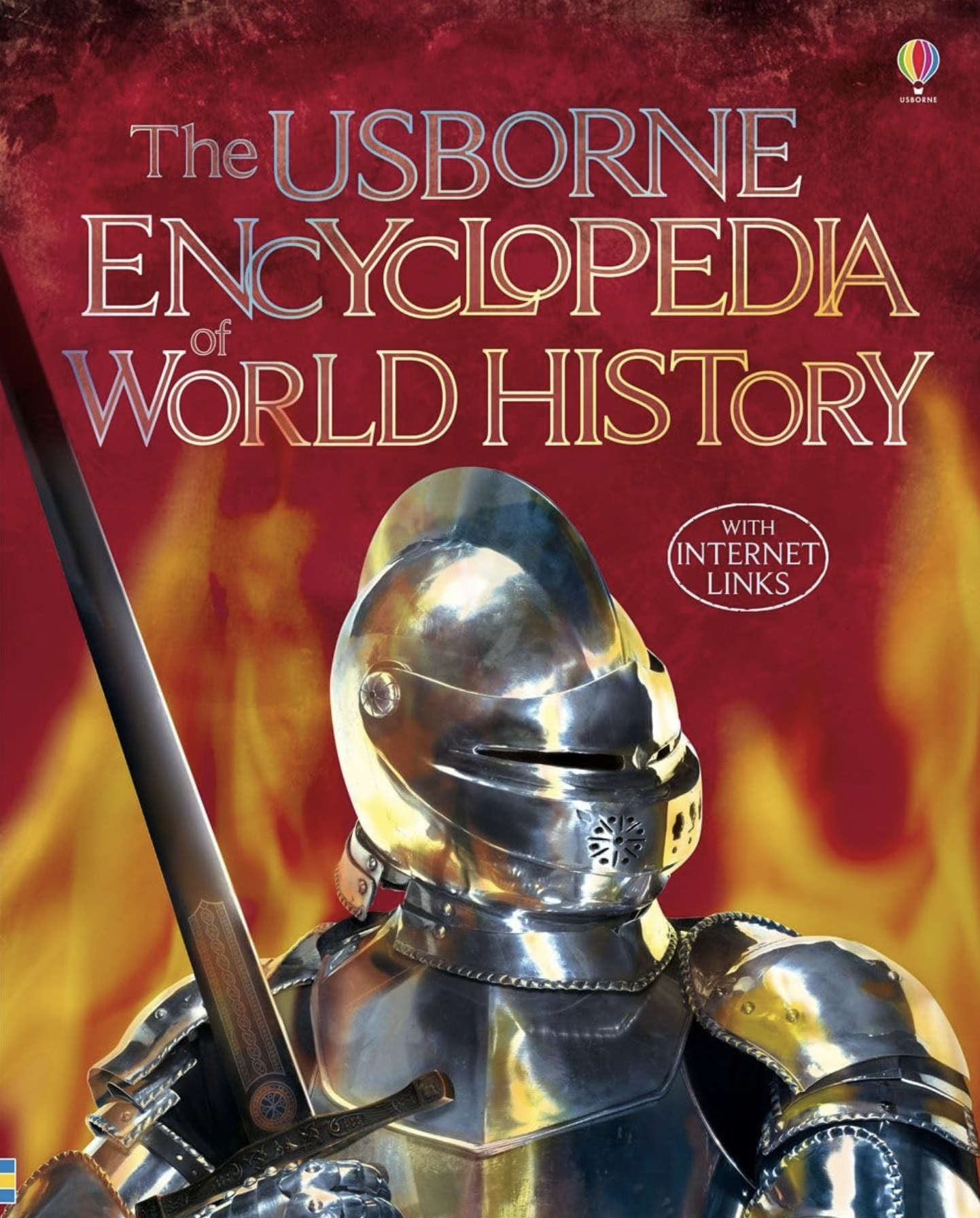
We use this ⬆️ history encyclopedia alongside Story of the World. It contains illustrations, timelines and maps that are a good companion to the main story. If we want to dive deeper we borrow more specific books linked to a particular period (Romans, Egyptians, Greeks etc.) from the library.
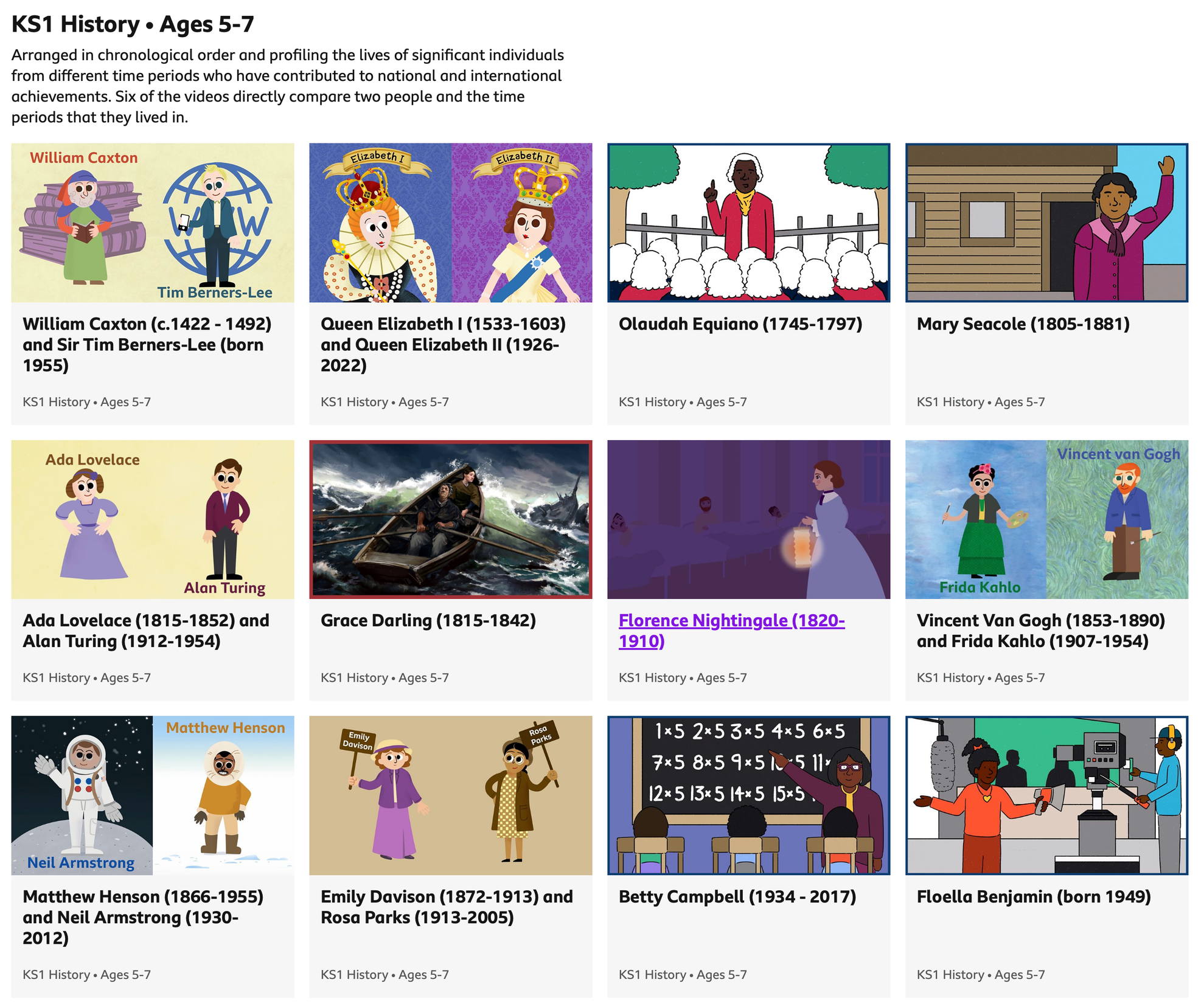
Biographies: Nothing beats a real person’s story to bring history to life. Not only do they build a better picture of the time period but it helps build empathy and understanding for different experiences throughout history. The library is a good place to start as well as the BBC resource above.
Documentaries: There are so many videos and documentaries out there which bring history to life
Stories & Myths: Legends and classics - from Greek myths to Shakespeare and epic tales like Gilgamesh, Beowulf and Iliad - add layers of drama, richness and culture. There are plenty of abridged, child-friendly versions of these available.
3. Making Connections: Seeing History in Everything
This approach sparks so many conversations! We've discovered so many links between eras and other areas of learning and it reinforces the idea that history isn’t a standalone subject, but something connected to everything we learn.
📜 Current events: We can link current topics today - democracy, justice, human rights and migration - to examples from Ancient Greece, the Magna Carta, colonialism and slavery or past migrations.
⚛️ Science, Maths and Engineering: Many inventions and scientific advances happened out of urgent need - medicine during wars, irrigation and sewage systems to prevent famine and disease, early number systems for trade as well as creating weapons for battle.
📖 The stories we read: As we read other stories or explore different subjects, history pops up everywhere - from characters in ancient myths to famous inventors, historical figures and recurring themes.
🥘 Everyday life: Even cooking, music or language can open a window into the past - recipes, instruments and words can carry centuries of history with them.
4. Getting Hands-On and Creative
Beyond reading, research and conversations, we can take history much further by getting creative! This could include:
🗺️ Drawing maps of empires or artistic patterns from different eras such as African Adinkra symbols, the Greek Key pattern or Celtic knots.
🧑🎨 Clay modelling, fromRoman pottery to portraits of Greek gods.
✒️ Writing secret messages in hieroglyphs or cuneiform
🧑🍳 Recreating recipes such as Ancient Roman Honey Cakes, Tudor meat pies or Victorian jam tarts.
♟️ Playing historical games like the Game of Ur, Senet, or Chess.
🎭 Dressing up or acting out different historical stories or periods throughout history.
🎨 Exploring their own creativity through role play, invented games or art projects.
5. Museums, Workshops and Exhibitions: Bringing History to Life
Museums, workshops and exhibitions are really brilliant for getting kids interested in history and for deepening knowledge of topics they’ve already been learning.
More and more places offer these for home ed families, and if they don't, many places are happy to run one if you can organise a group.
Visiting museums can be a balance between aimless wandering, seeing what your kids are drawn to, and bringing their attention to particularly impressive artefacts and stories. All kids are different. Some can spend hours there, others can get bored easily and a bit overwhelmed.
It can be useful to explore the museum online first, making a list of specific things you might like to visit to give the trip some focus - and then allow plenty of time for wondering about and exploring as well.
6. (Optional) A Timeline
Visual timelines are great for giving kids a sense of how different parts of history are linked and how the world changes over time. They can take a while to make though - I created ours in a big notebook during lockdown when I had much more free time (I’m not sure I’d have managed it otherwise!).
It's definitely optional, and you don’t need to begin too young. Only now have my kids started to fill bits in for themselves, before that they just flipped through it and I added the entries.
This website has a good description of how to create your own or you can buy ready made ones (although I haven't used this so can't vouch for how it's laid out).
The Result: A Richer, Deeper Understanding
This approach has been amazing. We encounter history everywhere, building connections and deepening understanding over time. The core book and timeline (if you choose to make one!) provide the anchor, and we add layers with different resources.
Already, my kids are making connections about leadership, values and human behaviour throughout history - they seem to grasp links between times and places much more clearly than I did as a child. They’re learning to see the people behind the events, to think about why choices were made and to notice how the past continues to shape the present.
History has quickly become the springboard for so much of our other learning.🏰