

Since it was Shakespeare Week last week, I wanted to share a post about the radical guy who turned literature on its head and talk about why I think he's so brilliant (even if English GCSE may have put you off!) and how to bring the Bard into your home ed life in an engaging, fun and meaningful way.
Shakespeare: Radical, Renegade and Revolutionary
If the mention of Shakespeare makes you think of dusty books, difficult language and dull GCSE lessons, then you're certainly not alone. But it's also a shame. Because Shakespeare was, in fact, an absolute radical and a trailblazer who changed the face of literature and theatre forever.
He pushed boundaries with his mischievous and scandalous ideas which were met with disapproval and outrage. He experimented with ideas and language, inventing words, phrases and literary tools that we still use today. He even hides clever puzzles, logical twists and patterns in his plays (including a clever and effective use of prime numbers which may or may not have been intentional!).
A few people come along at just the right time to shake things up and change how we think about things and see the world, like Leonardo da Vinci in art and science, Beethoven and The Beatles in music and Marie Curie in science and mathematics, to name just a few. For literature, a huge shift happened because of Shakespeare and his work, and that’s a big part of why it still resonates so many centuries later.
But Why Should We Even Bother With Shakespeare?
Even with all that brilliance, you might be wondering what the point is of sharing Shakespeare's work with children, especially younger ones as his work was never aimed at children. But aside from introducing them to an important historical figure, some of his plays are full of fun and cleverness that many children can and do enjoy. Here are four ways a bit of Shakespeare can make a big impact:
1. Language That Teaches Thinking
His plays are full of rich, inventive language. It's a great opportunity for children to expand their vocabulary and learn to play with language flexibly and creatively themselves.
2. Stories That Explore Life
The stories are about powerful human emotions, choices, friendship, courage and mistakes. These themes resonate with kids and can open up some deeper conversations about morals, decisions and seeing things from multiple perspectives.
3. Fun With Drama
The plays were written to be performed and there are plenty of characters and scenes which are really fun to act out, like Bottom and Puck from a Midsummer Night's Dream and the witches from Macbeth. Acting short sections out brings the stories to life and helps to understand the characters and their choices. Not to mention building up confidence in performance and self-expression.
4. A Cultural Foundation
So much of modern storytelling, from books and movies to songs and theatre, have been influenced by Shakespeare's work. This means children will start to recognise over time where his influence has spread in society and culture. Phrases such as Macbeth's "Double, double, toil and trouble" 'Et tu, Brute?" "Love is blind" and "All that glitters is not gold" all came from Shakespeare.
How We've Approached Shakespeare at Home
I’ll be honest here about my own experience with Shakespeare: I took English GCSE and A Level, both of which included Shakespeare, and I also completed an English degree. And yet, I didn’t really enjoy his work at all until I started learning alongside my own kids (I find this happens a lot with home education). And now at 7 and 10, they really enjoy some of his plays too.
I don't take credit for this.
The real reason we enjoy Shakespeare so much comes down to Ken Ludwig’s book How to Teach Your Children Shakespeare. He's one of those brilliant people with so much enthusiasm and passion for their subject that you can't not be inspired by them. For me, these people are some of the best teachers out there.
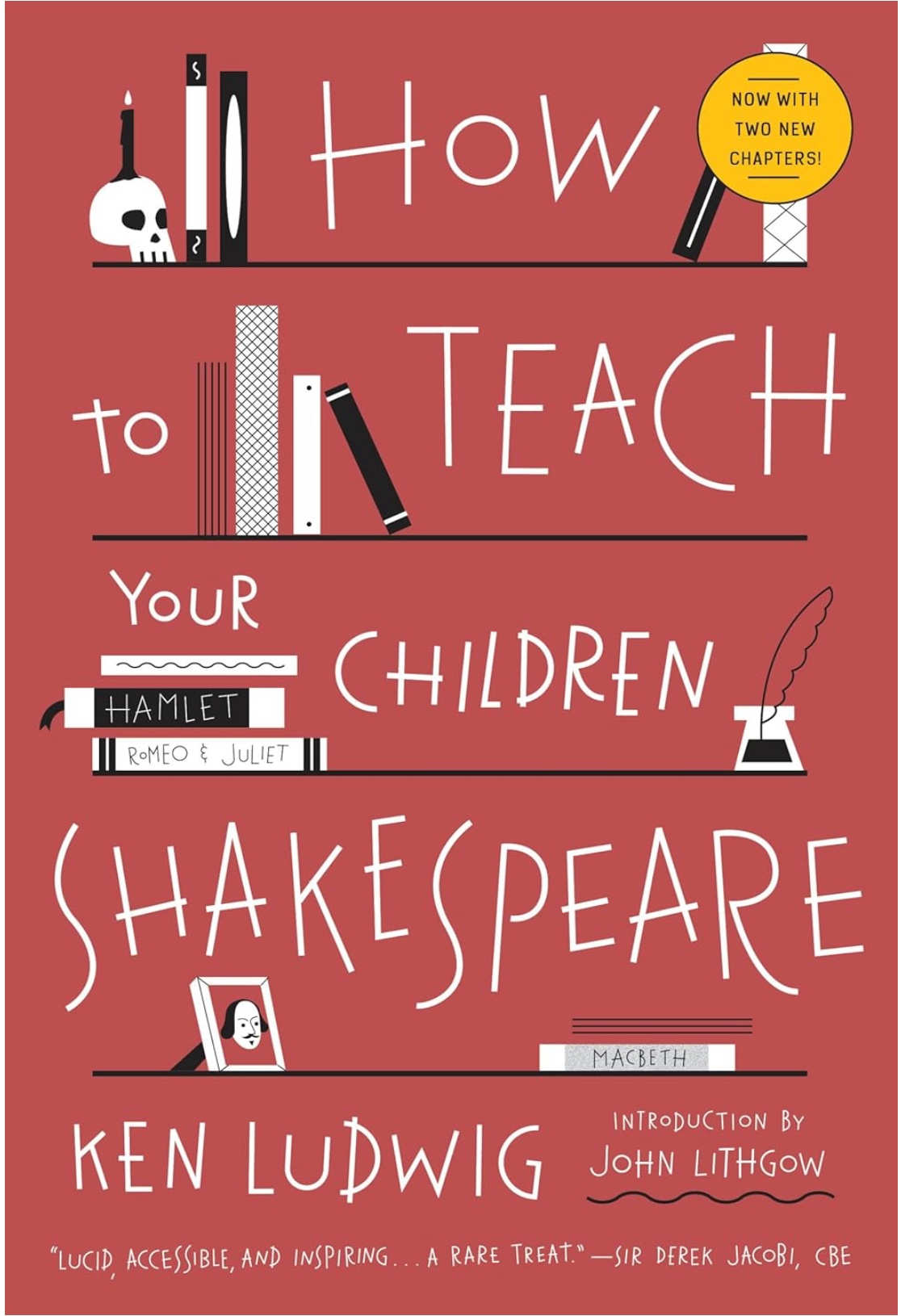
The great thing about this book is that he breaks Shakespeare down into small, accessible chunks. Each chapter works through a short extract, explains the language and clever little tricks Shakespeare is famous for, as well as how each extract fits into the bigger story.
As actor John Lithgow writes in the foreword:
"[Ludwig] discovered early on that his love of Shakespeare was something that he could share with his children. In hours of reading and reciting with them, he learned a surprising truth: that children are ready, willing and able to master these four-hundred-year-old plays. Give them the opportunity and they will hungrily devour them."
I couldn’t agree more. When I first bought the book, I expected my son to enjoy it most, but it was my daughter, who was 5 or 6 at the time, who surprised me by walking around reciting "I know a bank where the wild thyme blows..." They still remember the extracts from A Midsummer Night's Dream a year after we learnt them.
Not every extract in the book is appropriate for younger children but it's a book that can grow with you. A Midsummer Night’s Dream, with its magic and mischievous fairies, is a great place to start with younger kids as well as some lighter scenes from Twelfth Night. Plays with darker themes, like Macbeth or King Lear, are better left for older children.
Beyond the Book
Once we played around with the extracts in this book, and came to know certain stories, characters and speeches better, we then read the children's versions of some of the original stories. This felt like a good way round to do it because once they'd learnt the extracts and had a taste of the story, they wanted to hear more and find out what happened to the characters.
Usually, I prefer diving straight into the original versions of classics but at a slower pace, but for Shakespeare it would be much too overwhelming as the language is so different and needs a lot of decoding. Some really good simplified versions can be found here and here, and this one is a great exploration of Shakespeare for kids by Michael Rosen.
To enhance it even further, BBC iplayer has simplified children's versions of the plays here, which are really entertaining.
And of course, if you can manage to watch a live performance, this really is the ultimate way to experience Shakespeare. Seeing a play after engaging with it at home makes the experience far more meaningful and familiar - and much less daunting. And if you can catch a performance at The Globe Theatre in London then I'd really recommend it, they also offer some really good home education workshops and performance rates if you get in touch with them.
If you've never been a Shakespeare fan but are curious about exploring it further, even with young kids, then I hope this post opens him up a little more to you. With a bit of curiosity and the right resources (and no pressure!), Shakespeare's work can definitely be accessible for all ages.
Further Resources:
Shakespeare Birthplace Trust - includes resources for home learning and information about visits to the museum.
Folger Library - a great website filled with resources.
Globe Theatre - offer workshops and home educator discounts.
Willplay - the university of Oxford's AI, interactive site with the plays reimagined as WhatsApp conversations (great for teens).
myShakespeare - a really great interactive resource with full texts of some the most popular the plays.
Useful Books:
How to Teach Your Children Shakespeare
Michael Morpurgo’s Tales from Shakespeare