

In my last post I shared 5 Things I've Learned About How Children Learn Maths.
While most of our maths is done at home through games and interests, in this post I've put together some maths resources that have been really useful for exploring maths in different ways: mainly problem solving, inspiration and practice.
I like to pick and choose rather than rely on one all-in-one curriculum, as different resources have different strengths and can be useful for different purposes.
I've linked to some of my other posts about maths games at the end if you'd like some ideas for those too.
For Inspiring People & Videos
If you were taught maths as a collection of facts and procedures to remember, it can be difficult to see it any other way.
The people listed below can inspire you to think differently about maths if you don't feel as though it's your strong point or you dread it.
Greg Tang
A maths educator and author who makes maths more intuitive, helping children build number sense and encouraging them to think and problem-solve rather than just memorise rules and facts.
Tang’s TED Talk on Fluency & Reasoning is just over an hour long, but it’s definitely worth a watch. It's full of ideas that will help you support your child to develop the fundamentals of approaching maths with confidence and a problem-solving mindset.
The shorter 20 minute version below runs through the basics, although I'd recommend watching the full version if you can.
Jo Boaler
Jo Boaler is a professor of mathematics education and co-founder of YouCubed. She's worked to challenge the idea that being good at maths means being fast and getting the right answer. Like Tang, her work encourages us to see maths as creative and something to make sense of, rather than just remembering facts and written methods.
Her short videos What is Number Sense and The Importance of Struggle are particularly worth a watch.
Marcus du Sautoy
Marcus du Sautoy is a mathematician and Professor of Mathematics at Oxford University who has brought maths to a wider audience, revealing how it underpins the world around us and connects to almost every area of life.
His Num8er My5teries lectures are a wonderful way to see maths as something full of puzzles, patterns, mysteries and connections. If you want to inspire your child to see maths differently, it's worth watching at least one of these together.
Maths Problem-Solving Resources
NRich - nrich.maths.org
I'd much rather give a child one interesting NRICH problem and an hour to mess around with it than give them 30 routine questions with a formula to follow.
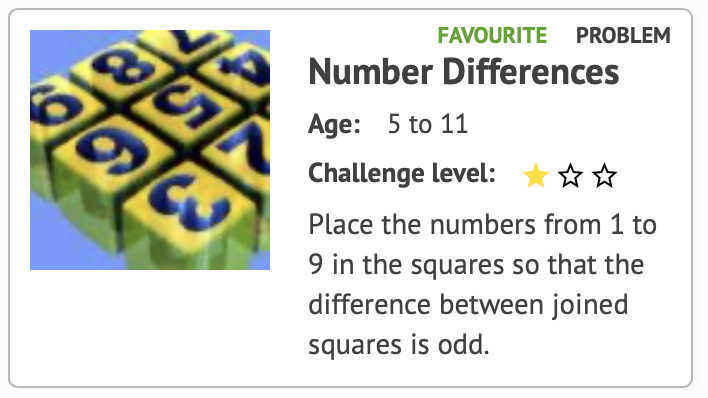
NRich is a huge collection of 'low threshold, high ceiling' problems, meaning children can get into them easily, but there's enormous scope for higher level thinking.
A good way to ease into problem-solving is to put a problem somewhere, like the fridge or on a whiteboard, for the whole family to have a go at throughout the week. It's a good way to get everyone talking about maths and sharing their thinking, without the pressure of having to get the ‘right’ answer.
YouCubed - youcubed.org
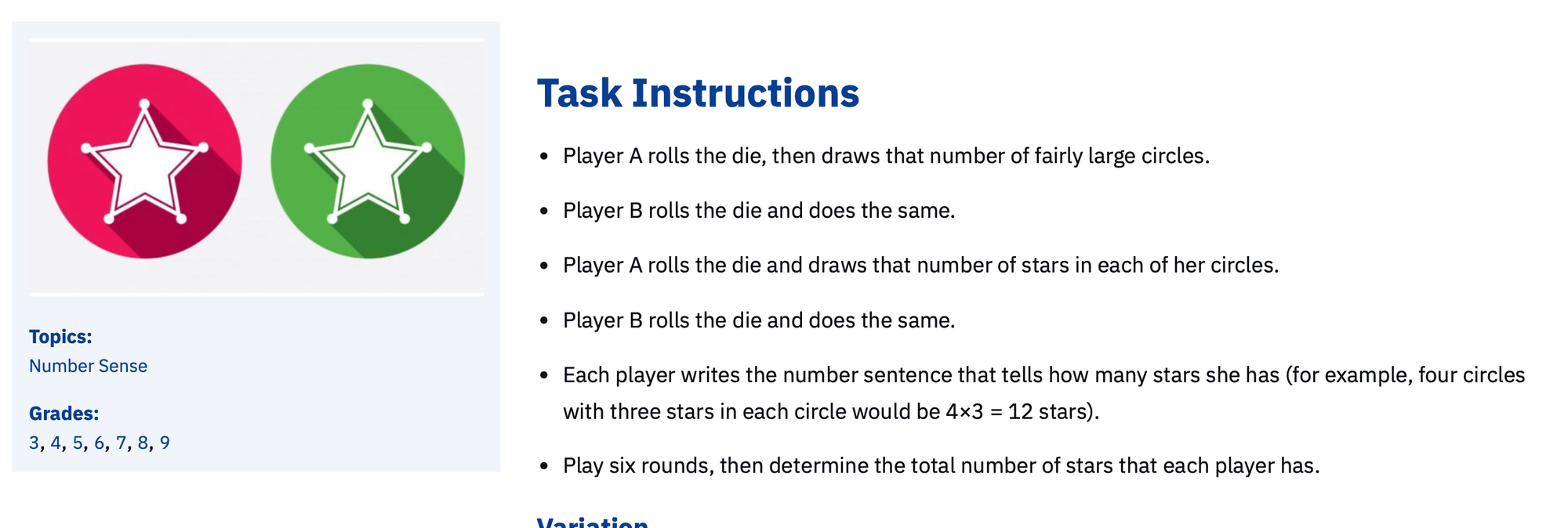
YouCubed is particularly strong for interesting, challenging problem-solving tasks, with lots of opportunities for children to think in different ways. Most of the activities are designed to be printed out, and there’s a great range of challenges to dip into. (Jo Boaler (see above) is British but works in the US, so the resources are organised by US grade levels - Year 2 is roughly 1st grade and Year 6 is roughly 5th grade).
Mathigon - mathigon.org
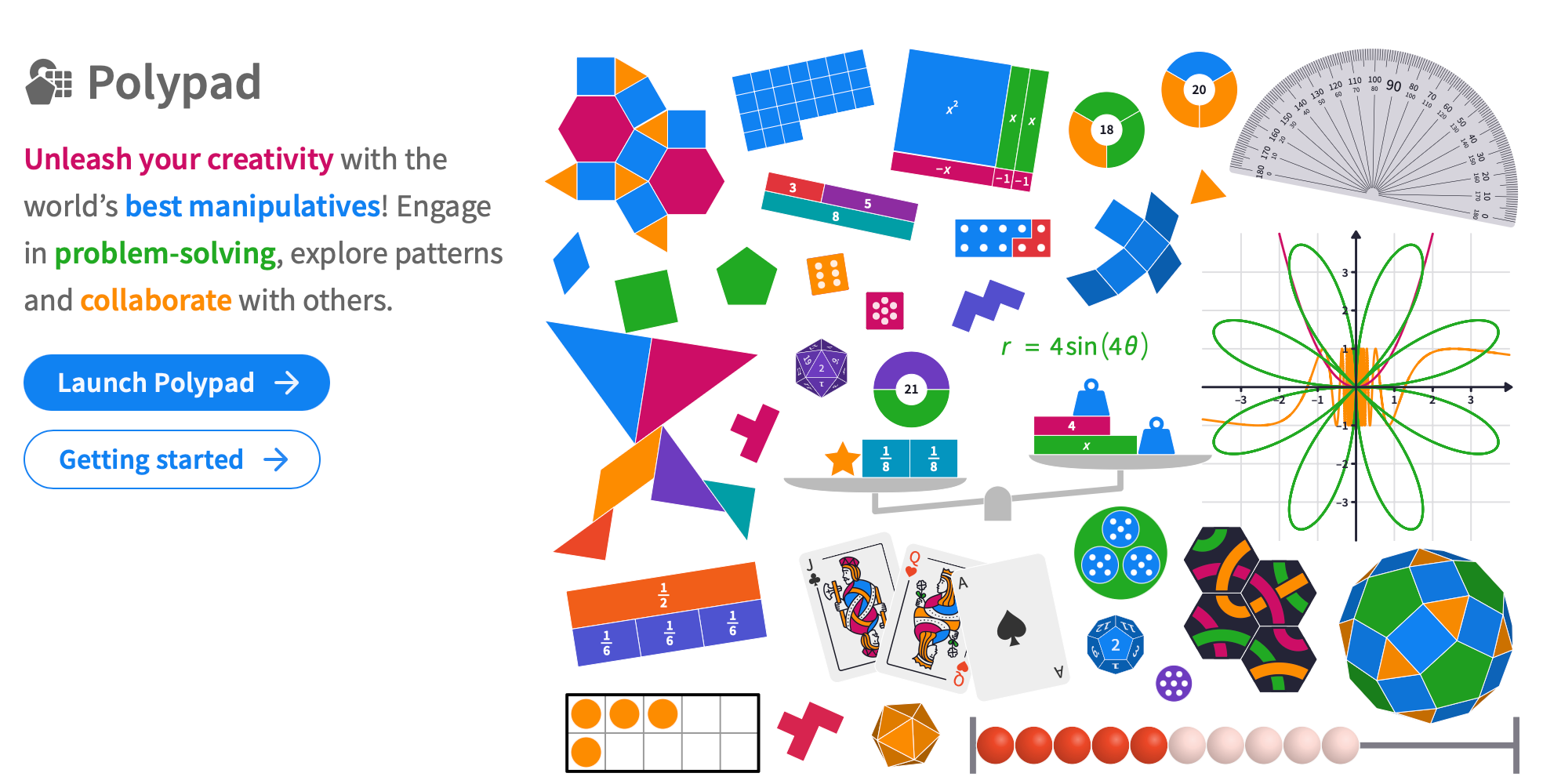
Mathigon is a great place to explore maths in a visual and interactive way. There are lots of different activities, puzzles and interactive courses, but we particularly like Polypad (above), which is a kind of digital maths playground where children can experiment with numbers, shapes, fractions etc.
There are also lots of interesting puzzles and activities to dip into when you want to explore something a bit different.
Maths Practice Resources
Corbett 5-a-Day - https://corbettmaths.com
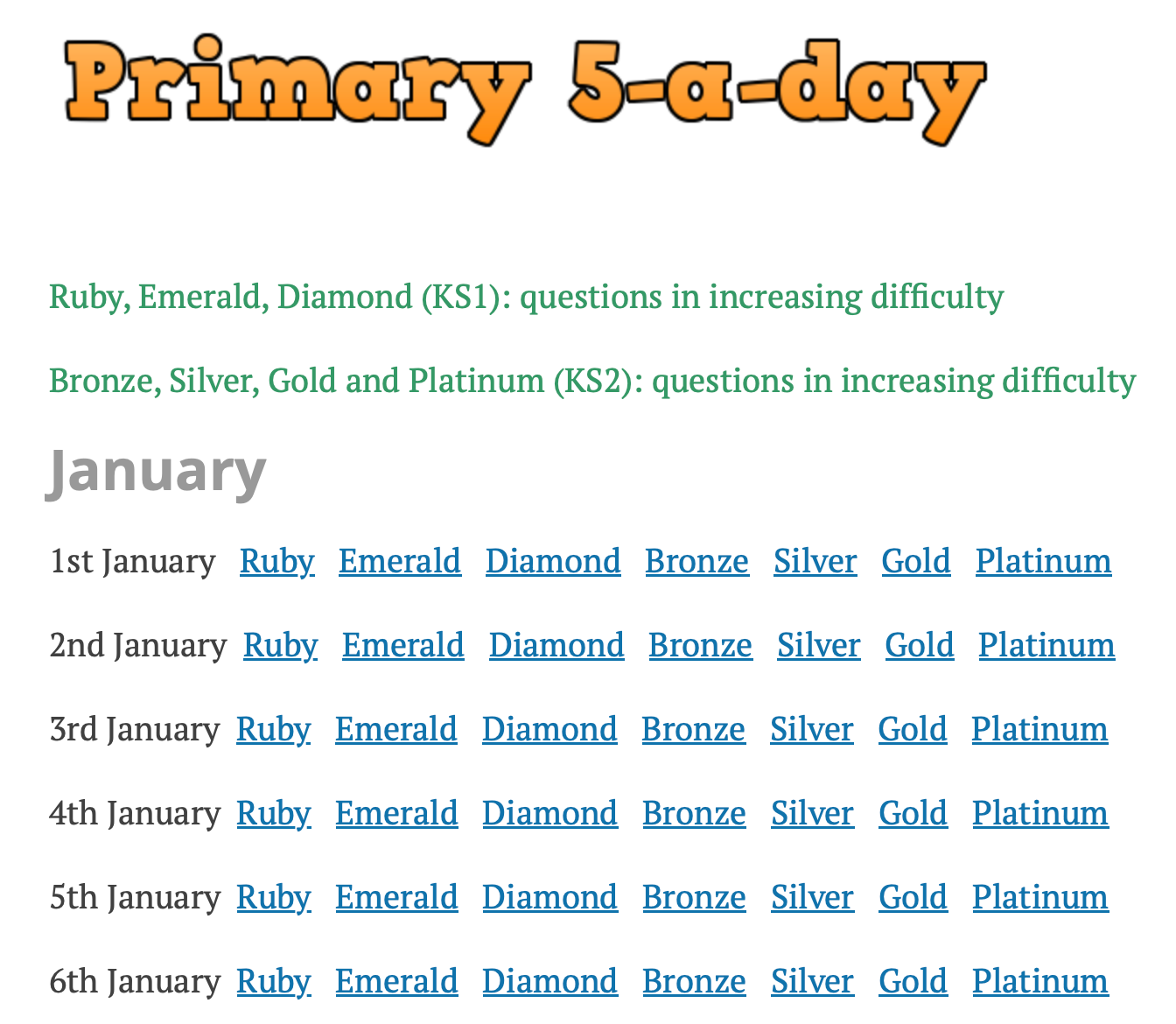
This is a really useful website created by mathematician John Corbett. We mostly use the 5-a-Day section, which gives you 5 questions for every day of the year, from primary through to GCSE and Further Maths.
This has probably been the best more-formal maths resource we’ve used. After doing a lot of our maths through games and puzzles, it’s been a really useful way to check and consolidate skills without feeling too heavy. We don’t do it rigidly every day, but usually 4–5 times a week.
The questions keep revisiting lots of different concepts, meaning you get regular practice across lots of skills. You can change it up based on their mood that day or their ability levels, and it's also a useful way to spot areas they’ve forgotten or need more practice with (and then go back over them through game, puzzles etc).
Tang Math Games
Created by Greg Tang, this website offers lots of different resources, but the one we use most is the Games section, which you can adjust by Grade (remember, Grade 1 in the US is Year 2 in the UK and so on). The games present concepts in lots of different ways, which helps to develop a more flexible understanding of numbers.
Tang also offers a full maths curriculum, which we haven’t tried, but having been so inspired by his approach to maths, it’s something I imagine would be a really good fit.
Twinkl
This is handy for just bog standard practice sheets like colour-by-numbers or themed maths. It isn't going to set the world alight and won't be for every child but it's a trusted, established resource in line with the national curriculum which makes a comfortable choice if you're after simple practice materials. You do need an account to download and it does have payment tiers, but quite a lot is available for free.
Structured Maths Curricula
Math Antics - mathantics.com
Math Antics is a website with short, animated videos explaining maths concepts, with worksheets available to practise alongside them. It's US based so uses the US grading system (Grade 1 = Year 2). The videos are free but there's a small annual membership charge for the worksheets (around £20 a year).
The presenter speaks quite quickly and the progression is fairly fast, so how useful you find it will depend on your child. I'd use it alongside other teaching or for consolidation rather than necessarily relying on it to introduce a new concept.
Khan Academy - khanacademy.org

Now my son is almost 11 and has taken an interest in following a more structured maths curriculum where he can see his progress so we’ve added Khan Academy alongside the games, problem-solving and real-world maths we do.
It’s quite formal but can be particularly good for children who like the video explanation and question format. It has quick checks of understanding, opportunities for consolidation and you can have the ability to set specific activities for them or they can work through it at their own pace in any order.
It covers a huge range of maths but it's US-based (as so many of the really great curriculums seem to be), so it won't map perfectly to GCSEs but for primary and pre-GCSE I think it's a really thorough, high quality resource.
As a structured programme running alongside the more creative and exploratory side of maths, I think it works really well.
Math-U-See - mathusee.com
This is the only resource I’m recommending in this post that we haven't used, purely because I've heard good things from many home educators families. If I wanted to follow something step-by-step with plenty of hands-on activities, then I would probably choose this.
It’s a structured maths programme using videos, manipulatives and written work to teach concepts step by step, with plenty of practice built in. It puts a strong emphasis on understanding how maths works rather than simply memorising procedures.
For Resources I’d Approach with Care
Maths Workbooks
Maths workbooks are usually last on my list of recommendations purely because they can be so hit and miss. But they definitely have their place - mainly for practice once a child has grasped a concept. For teaching new concepts, I’d steer clear and choose games, good quality videos or problem-solving with scraps of paper first.
Many workbooks overcomplicate simple concepts or don't explain tricky things clearly. They often show just one method and there's little space to scribble, work things out (crucial for maths!).
One great way to use them is to take a question or two and write them up on a whiteboard or scrap of paper to solve. The nice neat boxes in the books can be quite off putting for some children, especially those who hate getting things wrong.
Of the books we’ve tried, Collins are probably my favourite as they're a trusted resource (more on trusted resources below!) and are well written with generally clear explanations.
BBC Bitesize - www.bbc.co.uk/bitesize
Don't panic - I'm not saying don't use it! I like the BBC as a general resource across subjects, there are loads of great videos, activities and games on there.
For maths though, I'm a bit more careful. Some of the explanations and examples can be a bit confusing or overcomplicated. And on one occasion, I noticed how the activity didn’t match the explanation that came before it, which just added to the confusion for my daughter.
So I’d definitely use it, but either check it first or use it for extra practice rather than using it to 'teach' the start of a brand new concept.
AI Created Websites and Resources
There are lots of AI-generated websites and resources around now, and they can seem quite highly polished and professional. But it's always worth doing some research on any new resources you find: who created them, how long they've been around and whether there’s any real expertise behind them.
I’d be particularly careful with AI-generated maths resources. I’ve come across practice questions with incorrect answers (poor research on my part!). All of the resources recommended above are from credible, trustworthy sources.
Maths is definitely not an area where we want mistakes in the questions or inaccuracies in the curriculum!